Strain from pulse.
The daily load follows the training impulse by Banister: minutes times heart rate reserve, weighted by sex. The heart rate reserve goes back to Karvonen, and Aellic estimates the maximum pulse by Tanaka as 208 − 0.7 × age.
What you see in the Training tab, how Aellic calculates your strain, your window and your Strength Rank and where the numbers come from.
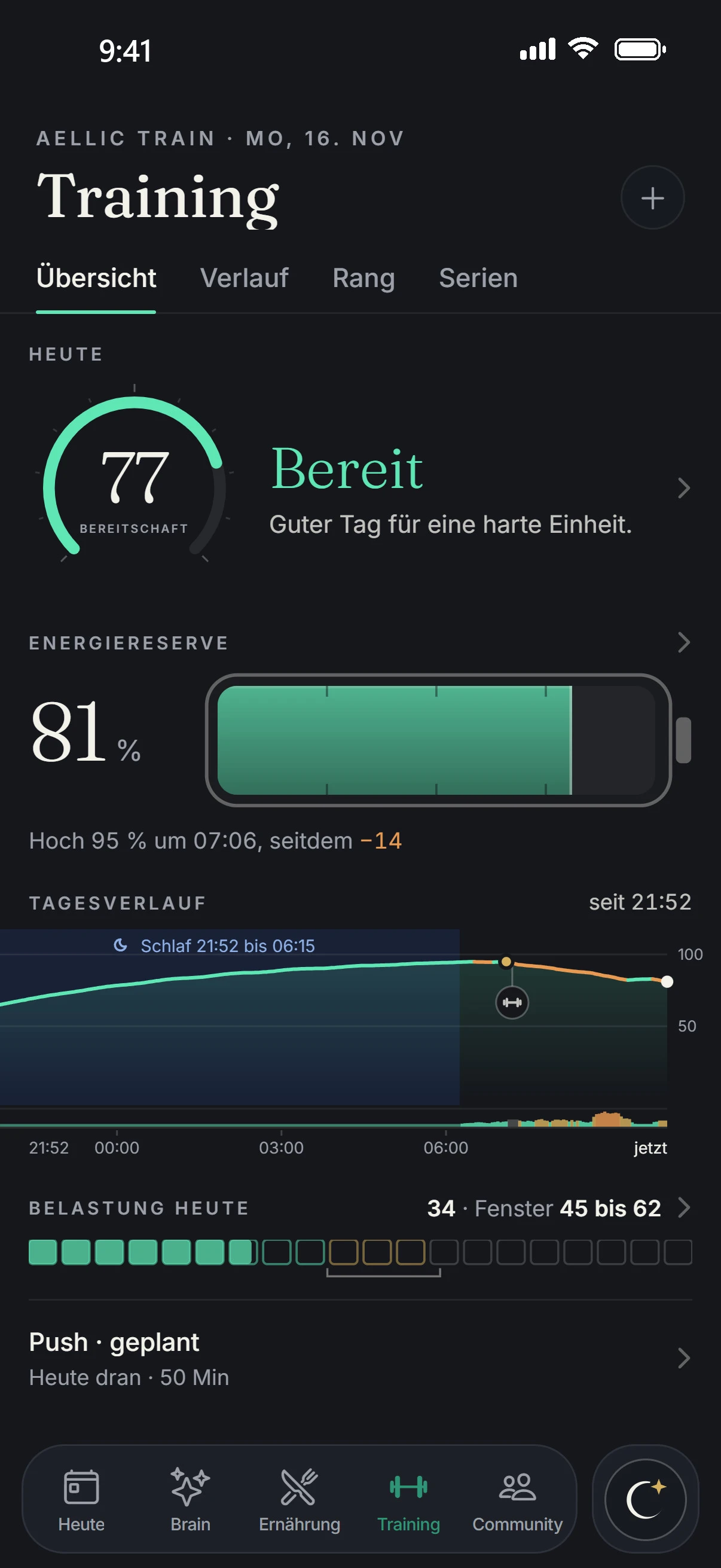
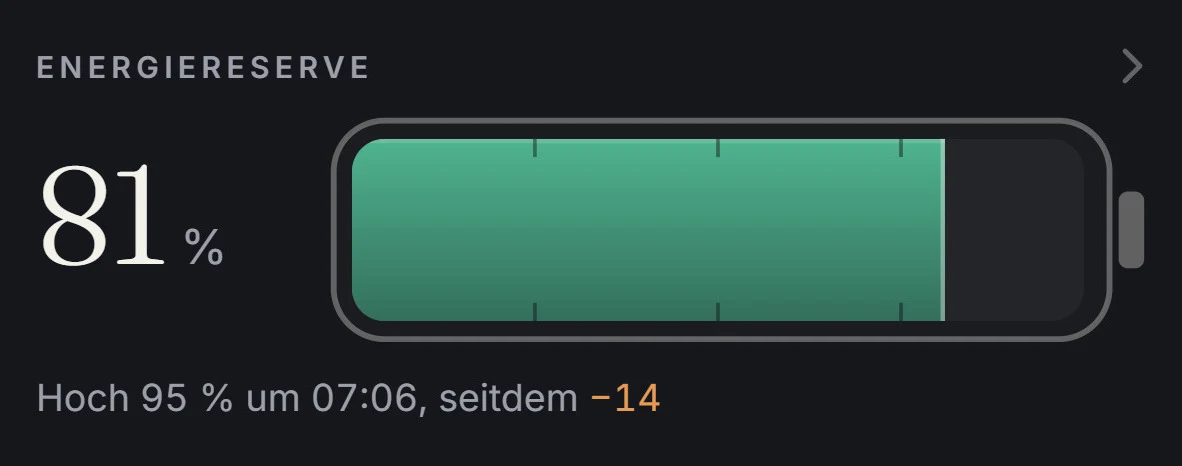
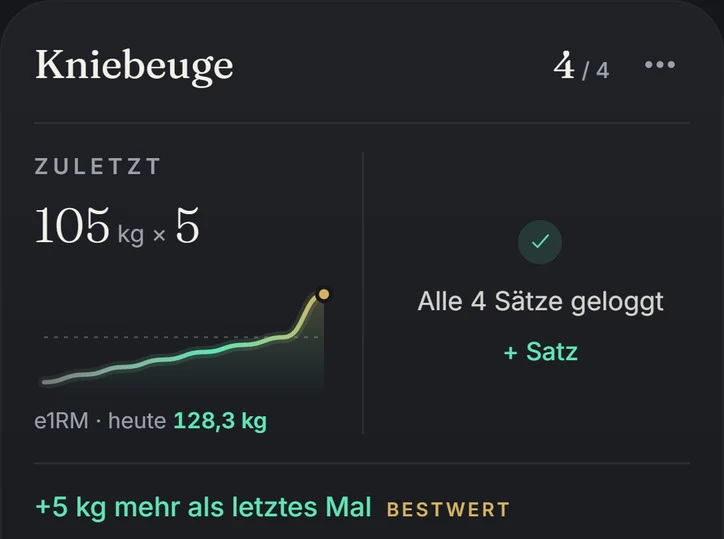
Every image is a real screen from the app. Above each one it says where to find it.
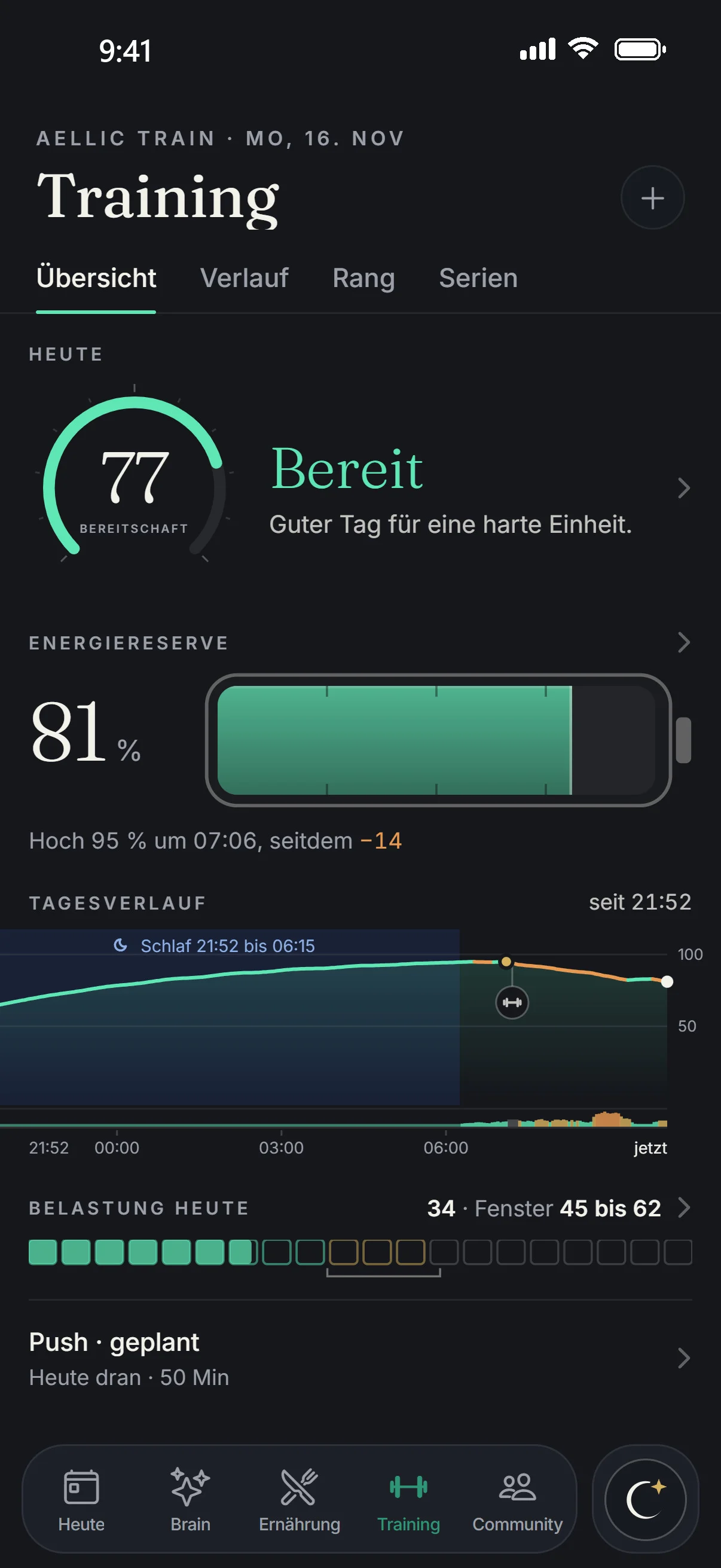
At the top your readiness for today, here 77 and “Ready”. Below it your energy reserve with its day curve, then your strain as a row of cells, your window in gold.
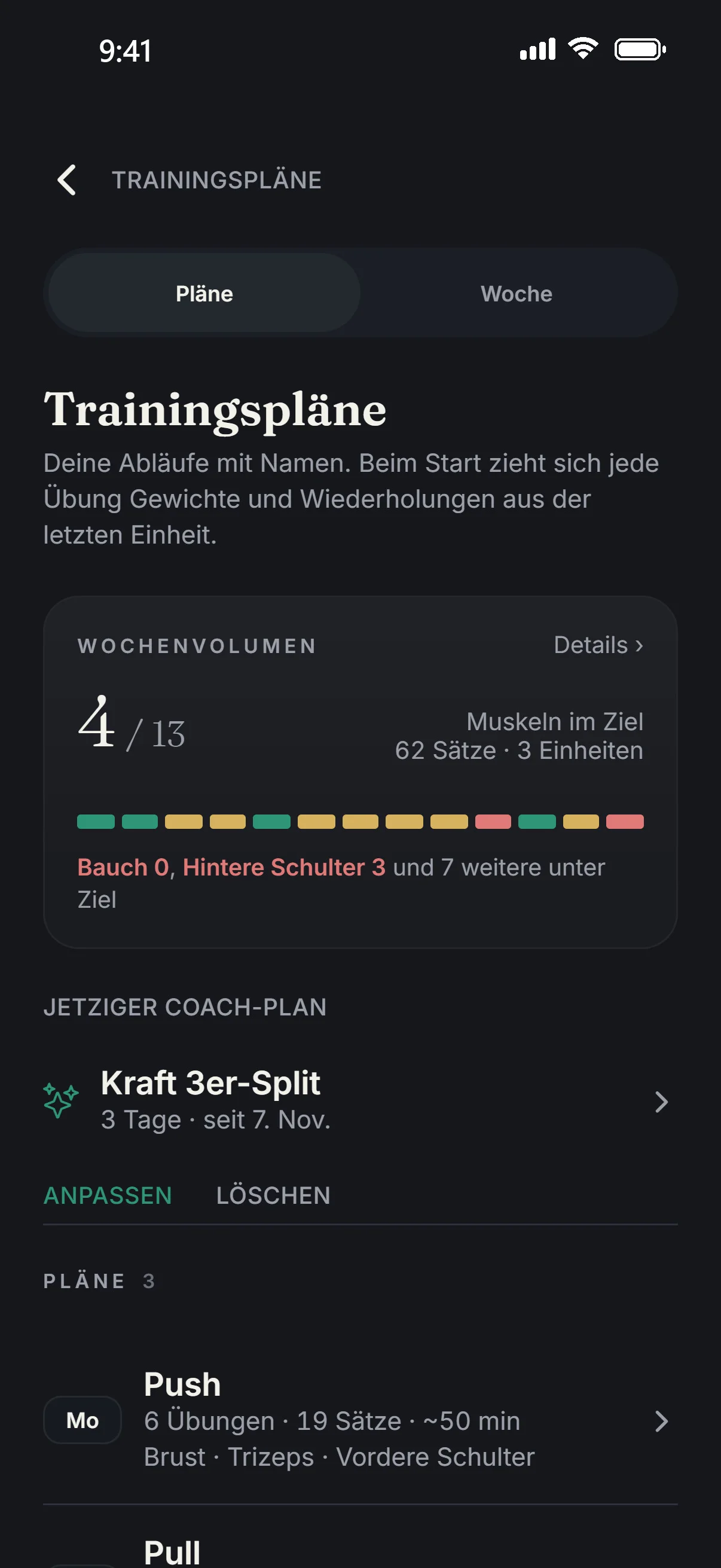
Under Plans you put a plan together from the exercise catalog, with a set target per exercise. While you build, the weekly volume per muscle changes with every set.
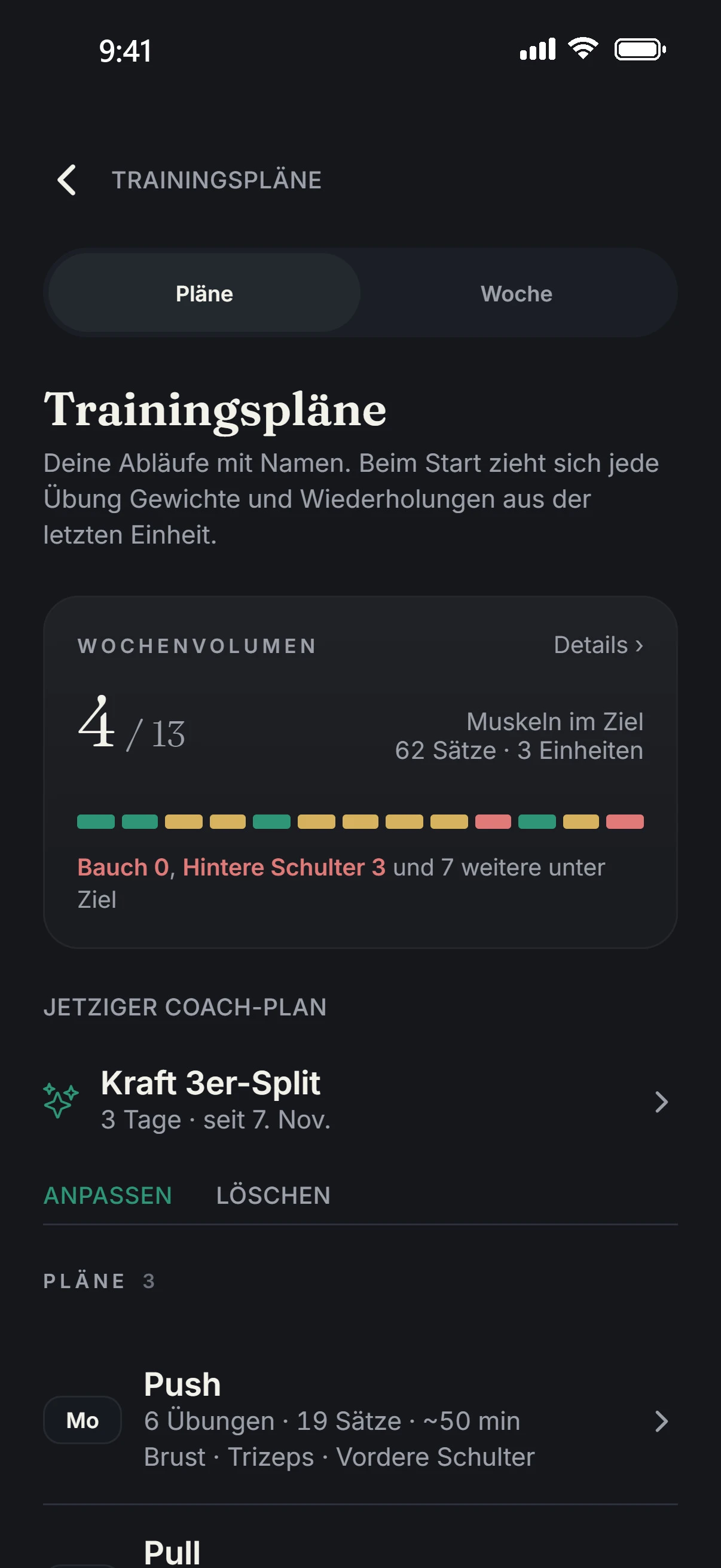
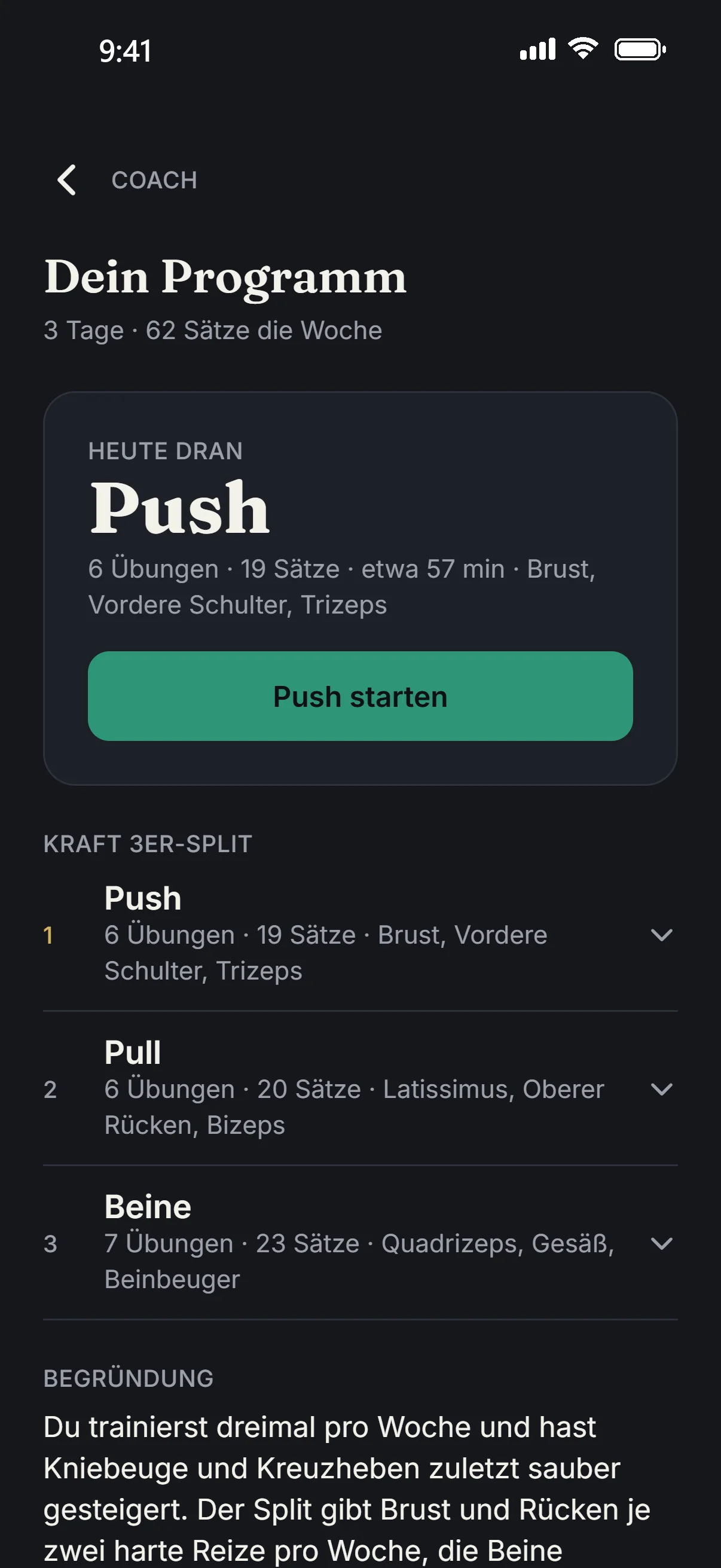
Under Coach, Aellic puts together a whole program from your goal, your experience, your days per week and the length of a session. Each day of it is a workout.
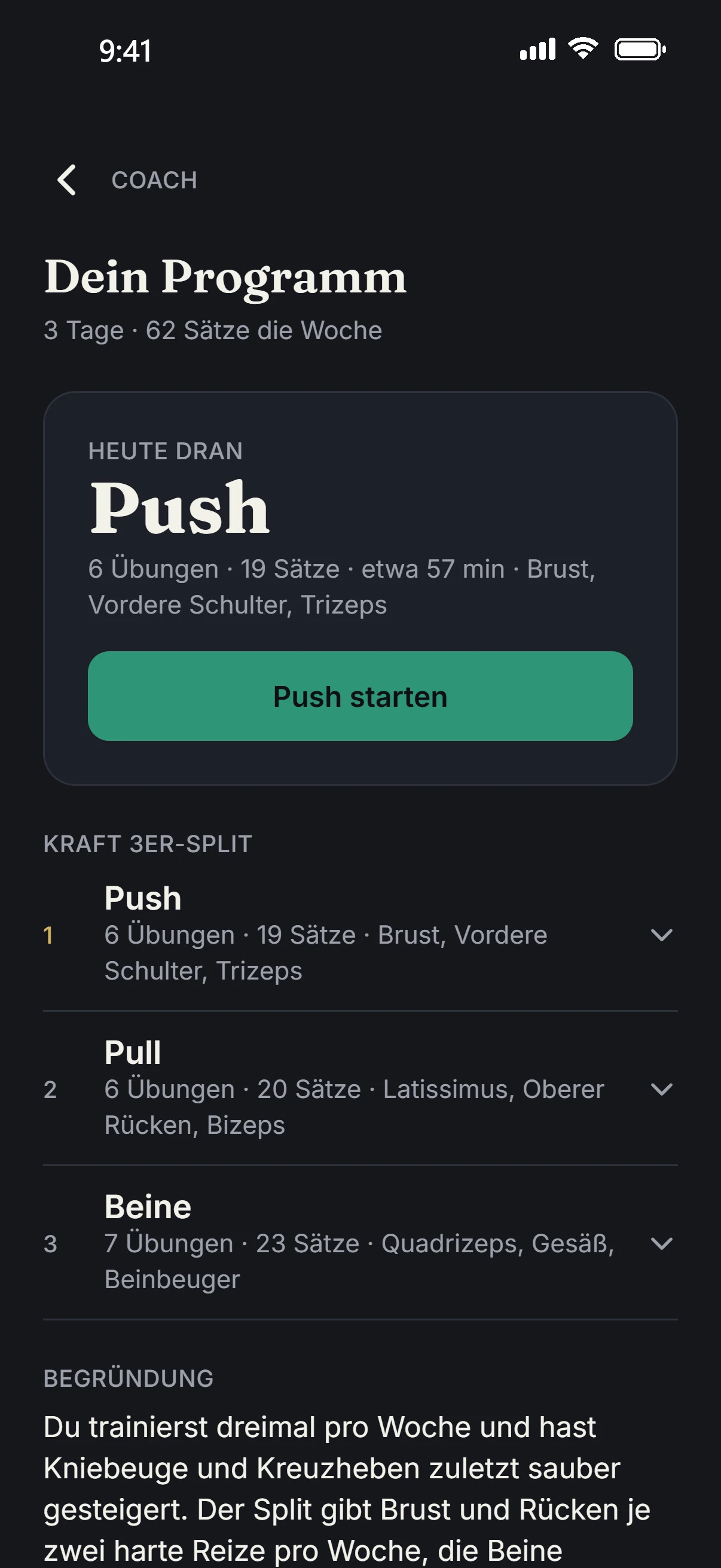
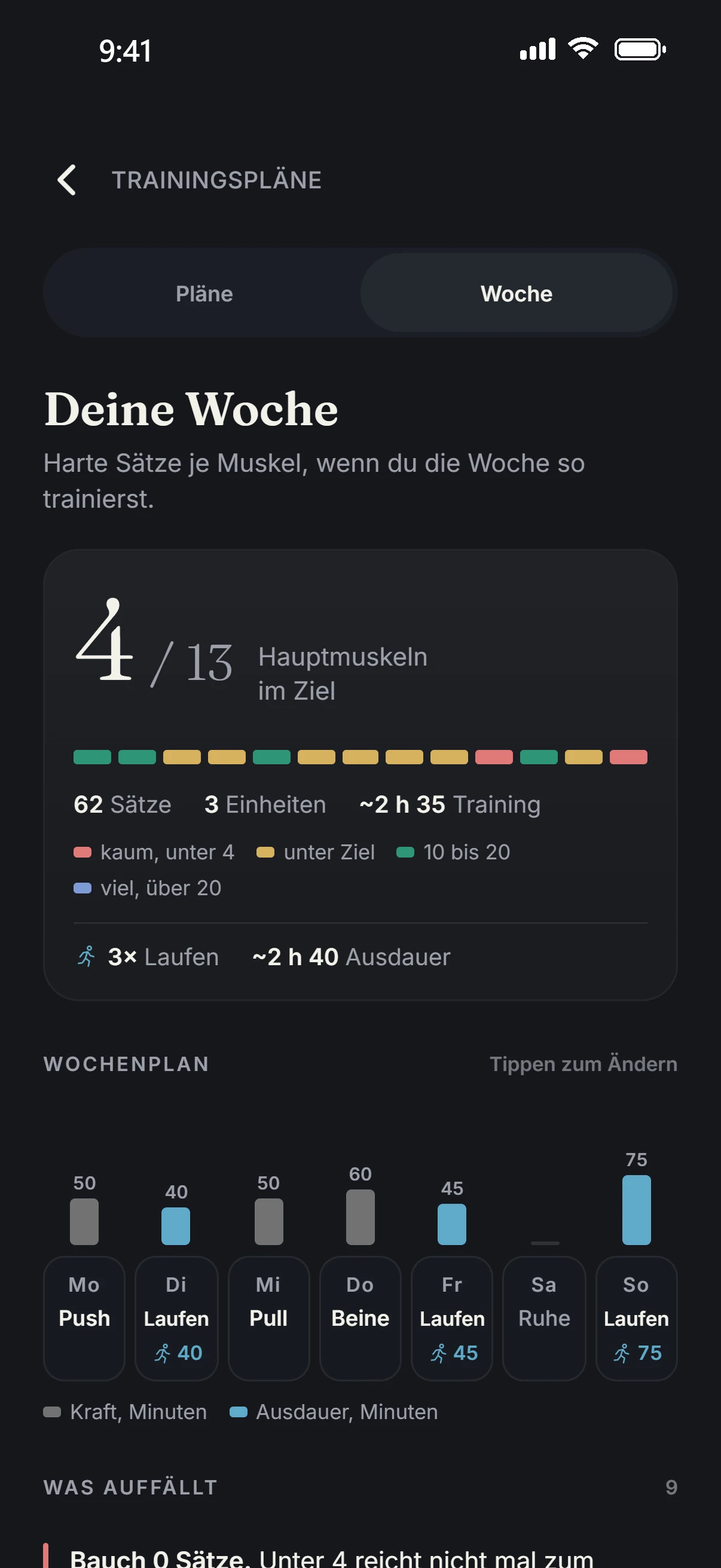
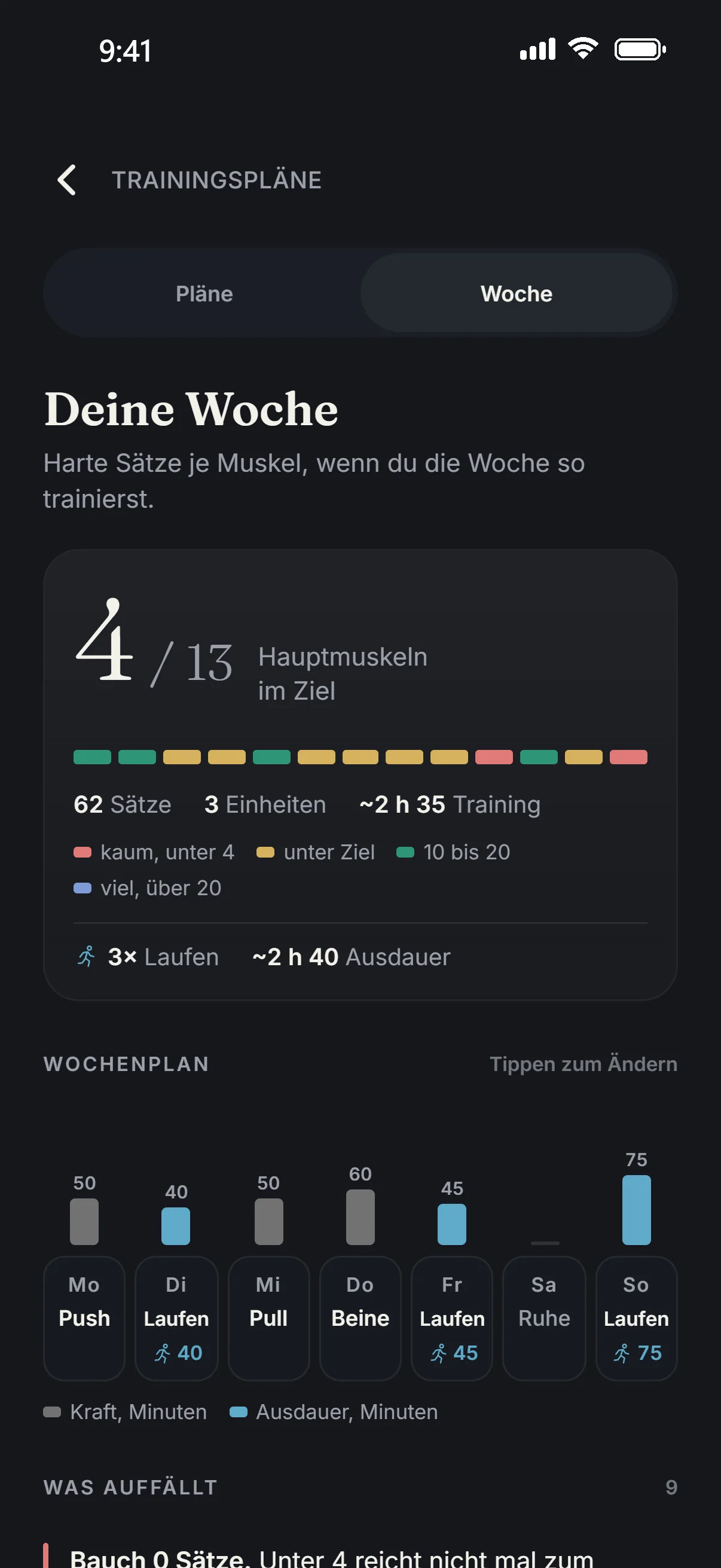
In the week plan you put running, swimming, cycling and other endurance sessions on a day, with their minutes. They sit next to your strength plans.
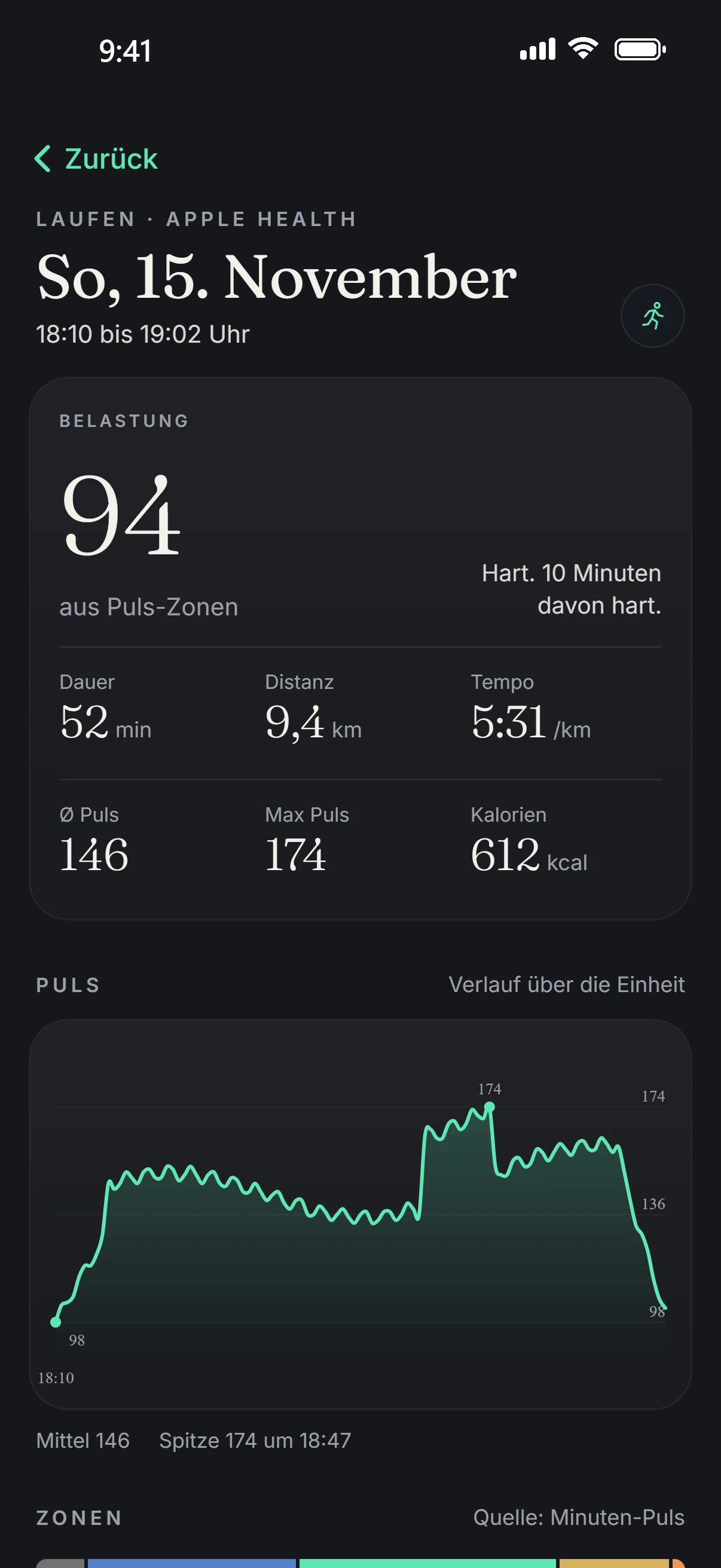
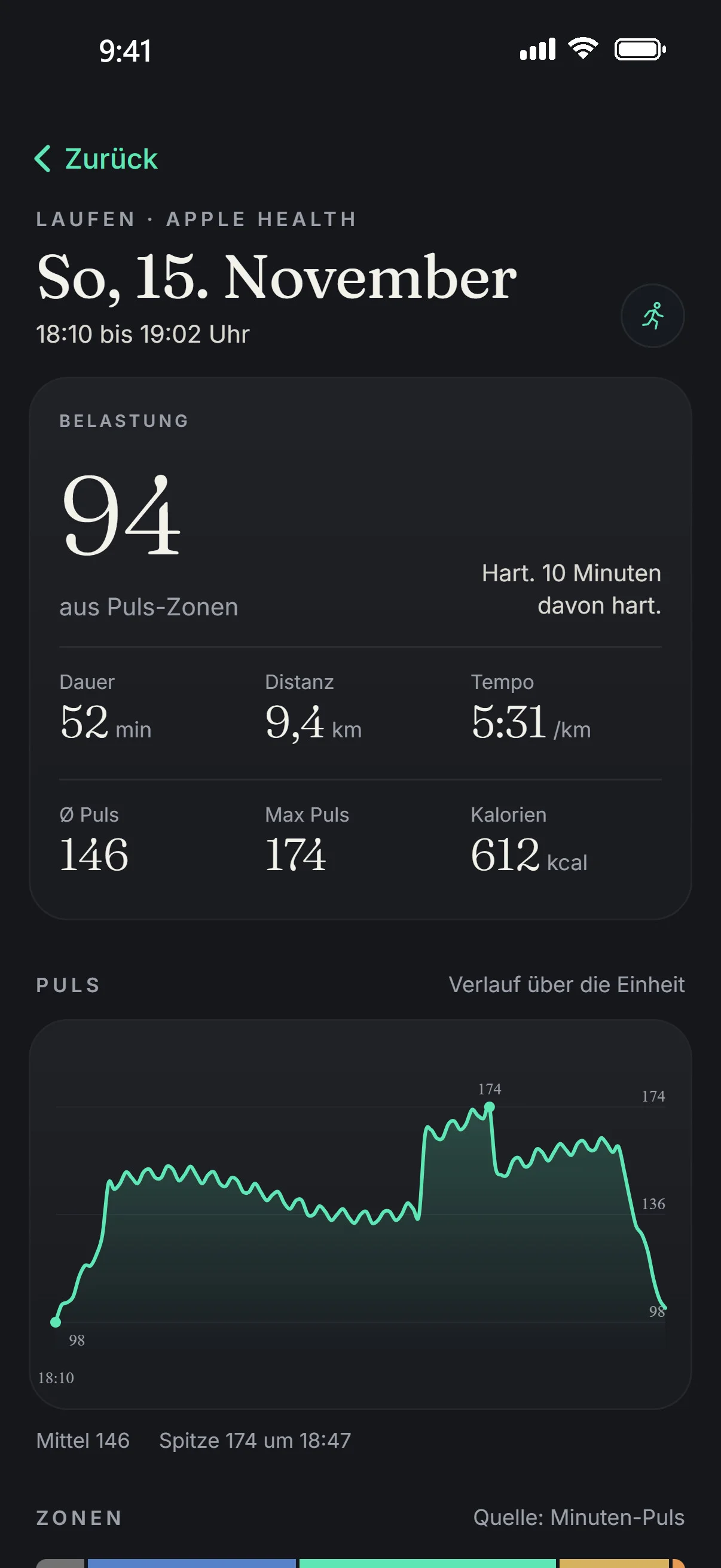
Your workouts and activities from your watch, listed by day. Each one opens its own detail.
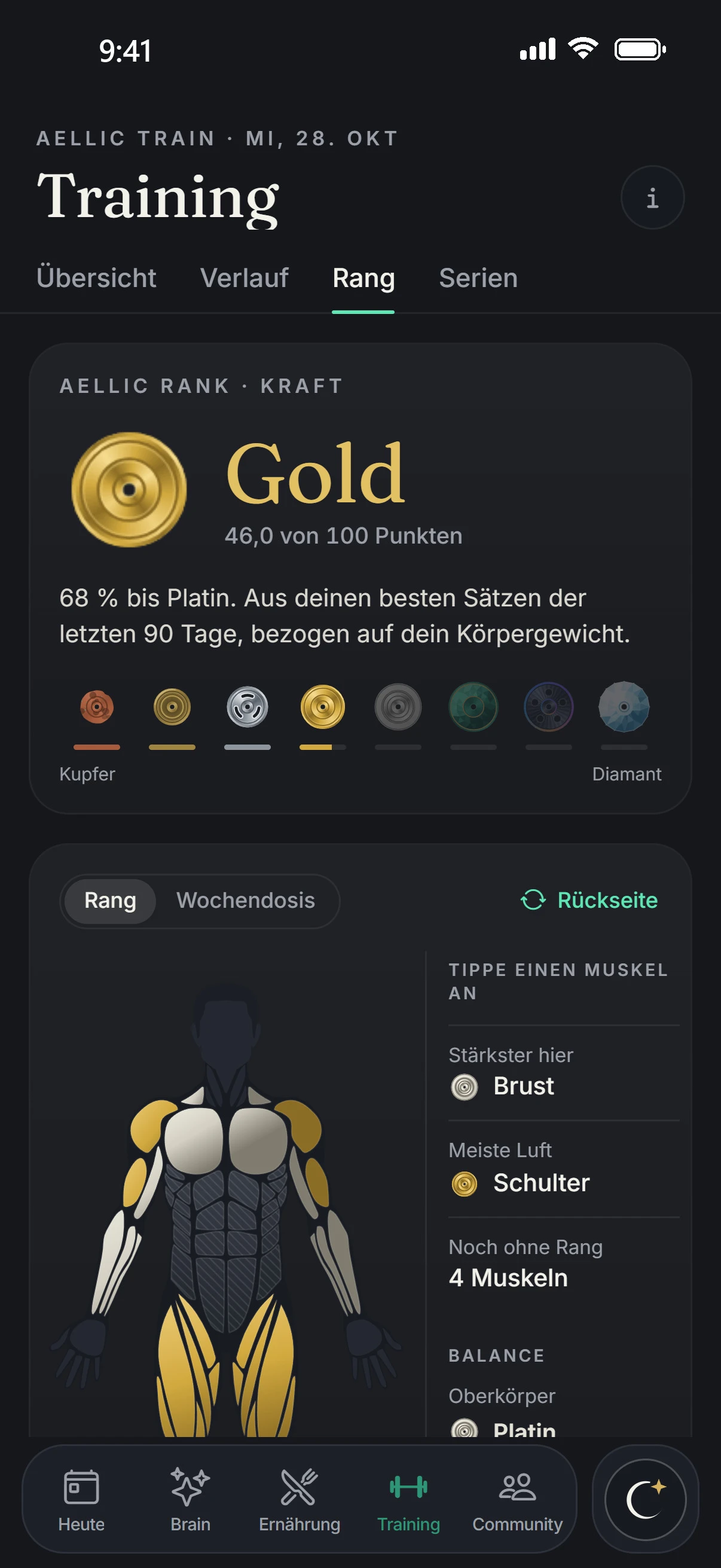
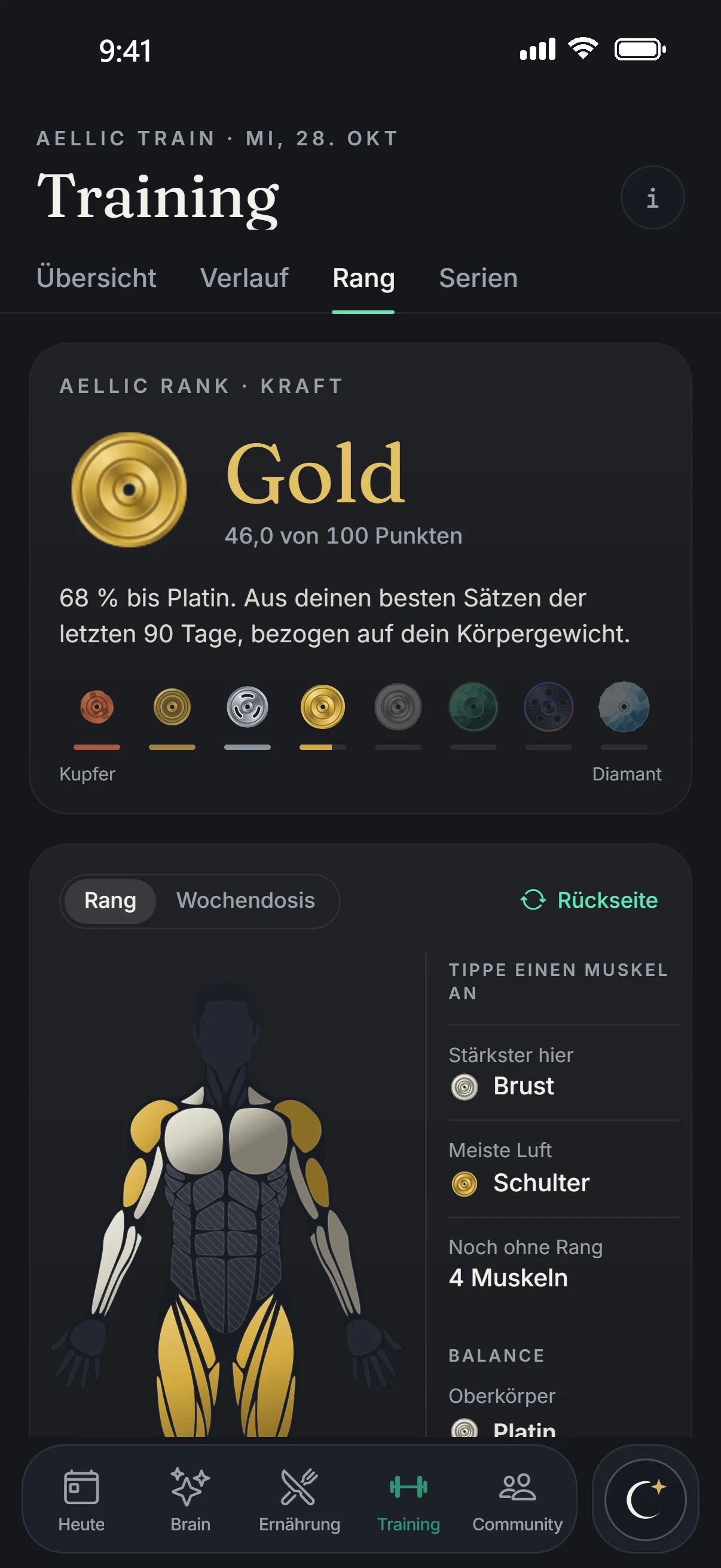
AELLIC RANK · STRENGTH: a tier from your best sets of the last 90 days, relative to your body weight. Here Gold with 46.0 of 100 points.
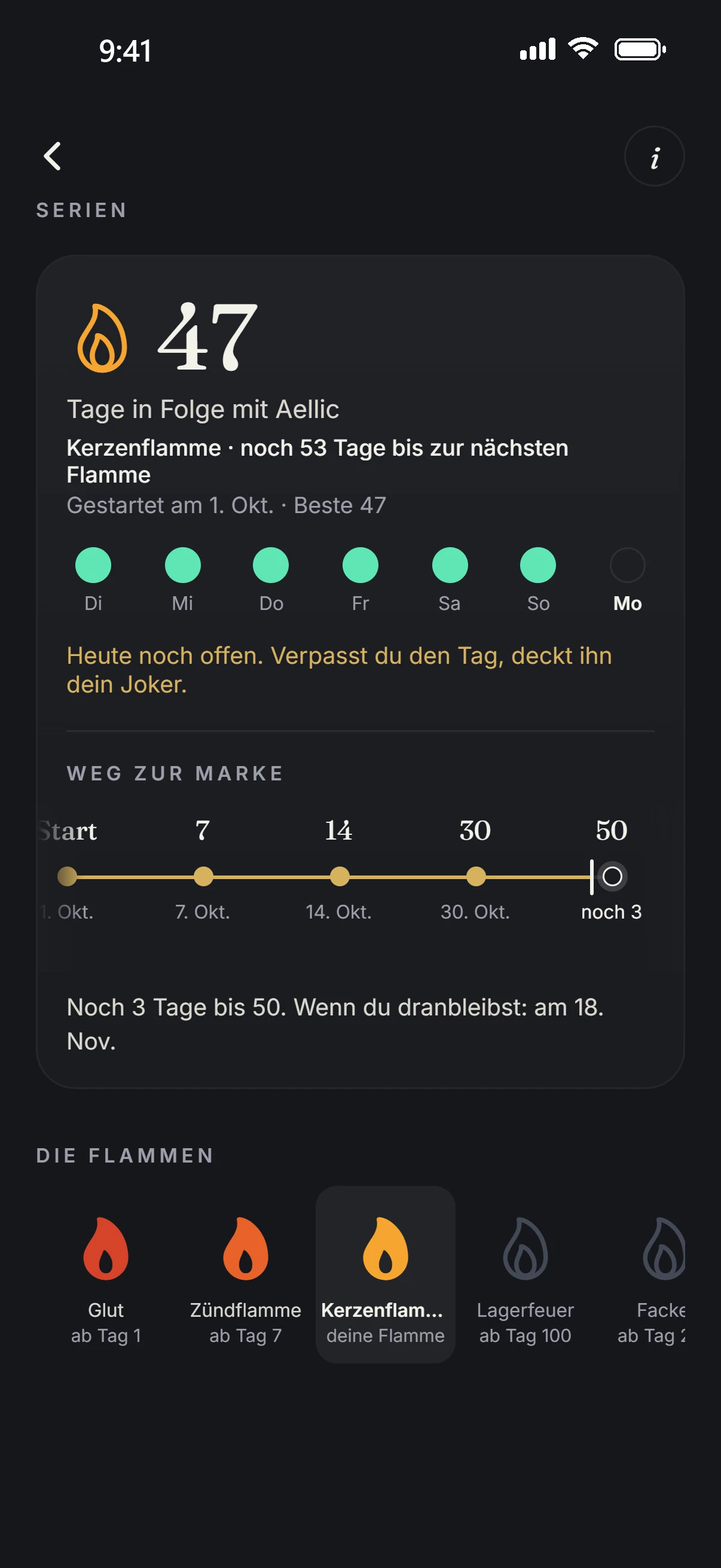
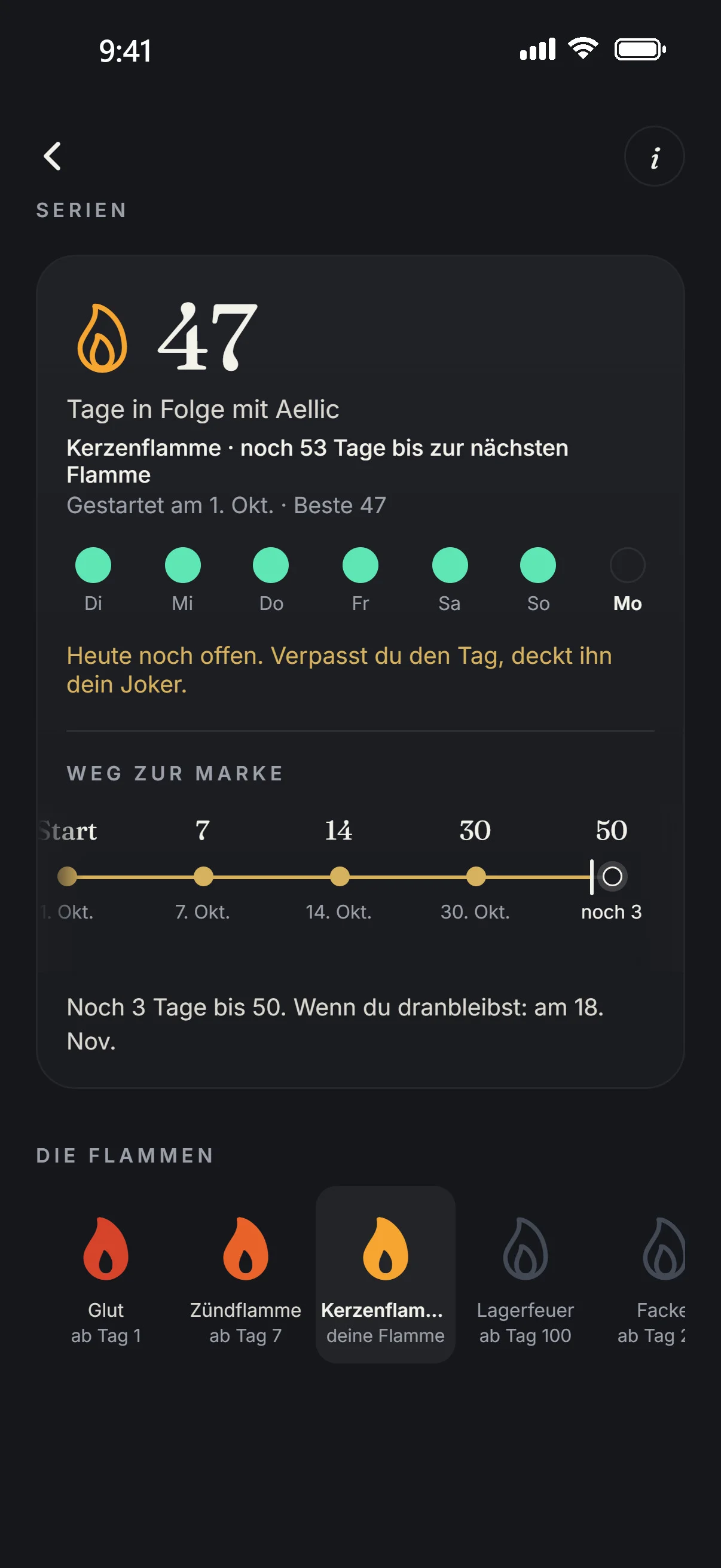
STREAKS: here 47 days in a row with Aellic. Below it the days of this week, today is still open.
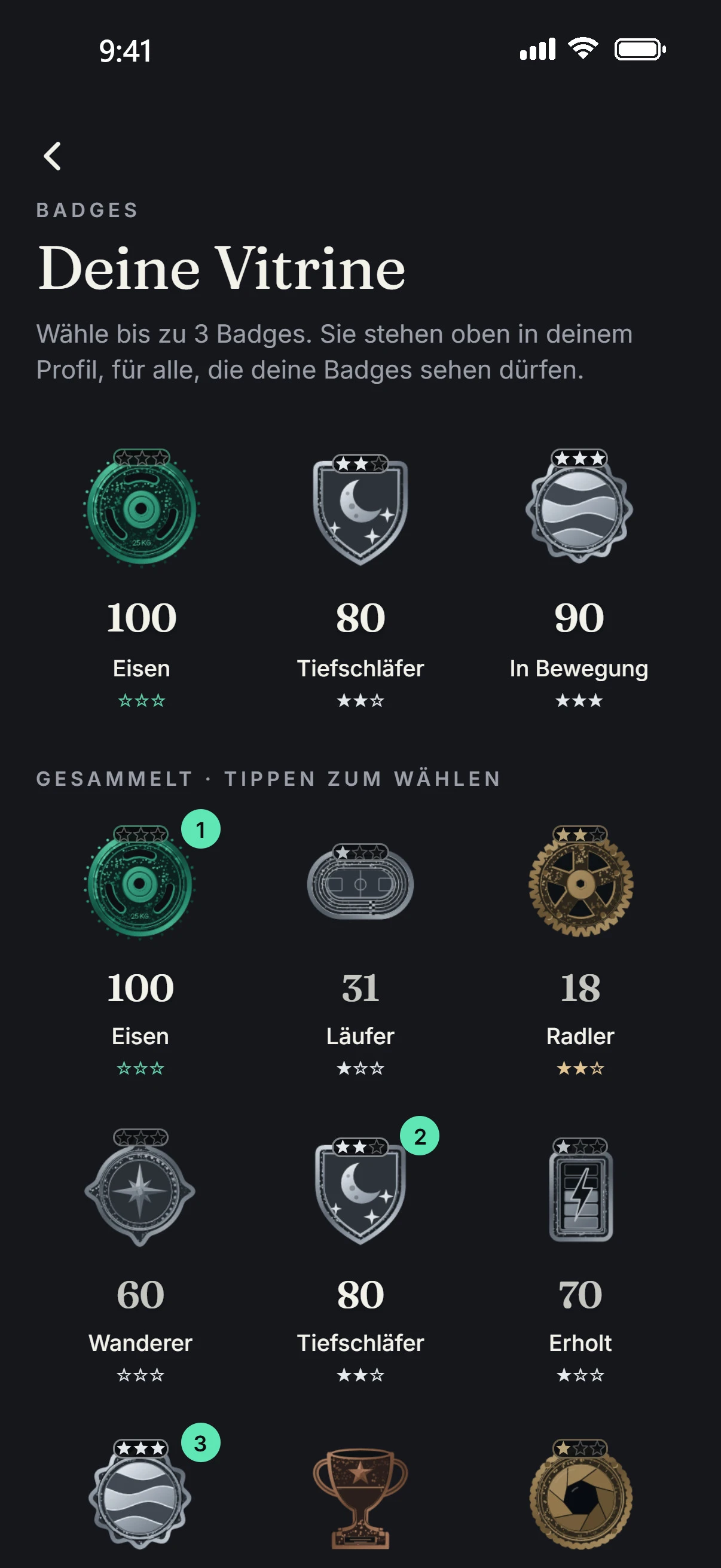
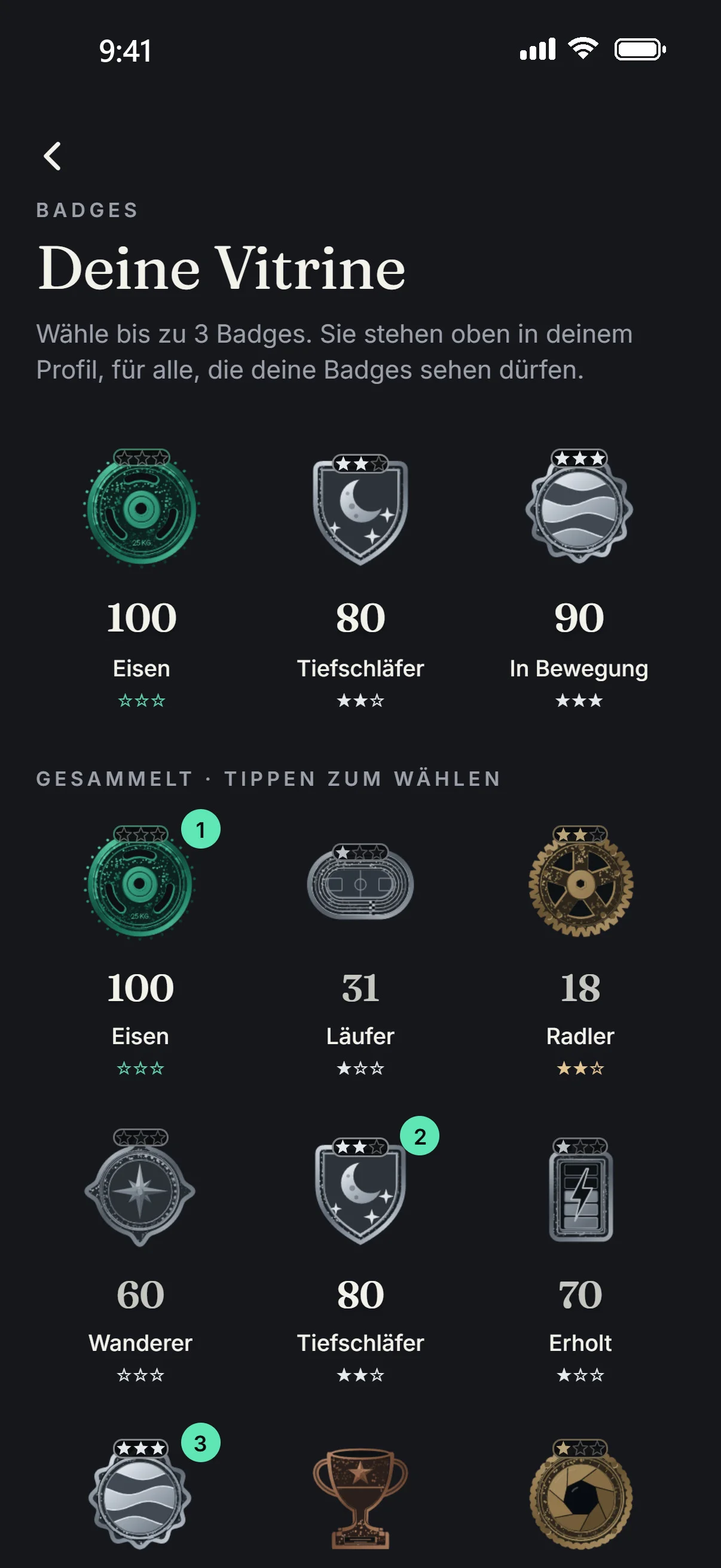
Choose up to 3 badges. They sit at the top of your profile, for everyone who is allowed to see your badges.
The calculation behind “Strain today” on “Overview”, simplified to a single session. Move the sliders and see how strain, window and “Room left” are formed.
Strain runs from 0 to 100 and flattens toward the top. At a daily load of 165 it stands at 63, and every further minute adds less.
4 more to reach your window.
Your window follows your readiness and your last 28 days.
100 × (1 − e^(−L / 165))minutes × HRR × 0.64 × e^(1.92 × HRR)HRR = (pulse − resting pulse) / (max pulse − resting pulse), max pulse = 208 − 0.7 × agefactor per readiness × average training day + average daily life, converted like the strain. Here with example values L 88 and L 11.Simplified demo of the real formula: one session, average pulse, age and resting pulse fixed. In the app, your zone minutes count first, then the average pulse, then your perceived effort. Example values, your own are in the app.
33% to Emerald. From the squat only, relative to your body weight.
weight × (1 + reps / 30), repetitions at most 10.anchor at 80 kg × (body weight / 80)^(2/3)Simplified demo: squat only, table for men (0.75 / 1.25 / 1.75 / 2.25 / 2.75 × body weight at 80 kg). Below the first and above the last anchor, the demo continues linearly. Example values.
Every rule links to its source in the public register. Where there is none, it says so.
The daily load follows the training impulse by Banister: minutes times heart rate reserve, weighted by sex. The heart rate reserve goes back to Karvonen, and Aellic estimates the maximum pulse by Tanaka as 208 − 0.7 × age.
Aellic takes your zone minutes first, then your average pulse. If both are missing, your perceived effort (RPE) by Foster counts. If there is none of that either, Aellic estimates and marks the value as “estimated”.
The window is not a ratio of acute to chronic load (ACWR). The criticism of this measure is laid out in these reviews, which is why Aellic does not use it. The window is measured against your own average training day.
From weight and repetitions, Aellic estimates your one-repetition maximum by Epley. More than 10 repetitions count as 10, warm-up sets do not count.
Aellic divides your strength by body weight to the power of 2/3, after Jaric. The anchors for the points come from the 5th, 20th, 50th, 80th and 95th percentiles of Strength Level, separate for men and women.
The weekly dose on the figure is counted in sets per muscle, with assisting muscles counting half. The basis is a meta-analysis on sets per muscle.
These parts are rules set by Aellic. They are consistent in themselves, but cannot be derived from studies:
The window needs your readiness and at least 6 training days in the last 28 days. Until then “Strain today” says: “window not set yet”. Aellic still counts your strain in the meantime.
Yes. Aellic takes zone minutes first, then the average pulse, then your perceived effort (RPE). If everything is missing, Aellic estimates the load and marks it as “estimated”.
Garmin, WHOOP and Fitbit connect directly. Apple Watch and others, such as Oura, Polar, Huawei, Coros and Suunto, come in through Apple Health on iPhone, and through Health Connect on Android. Aellic runs on iPhone and Android.
Because your daily life counts: 0.10 per active kcal outside your sessions. The breakdown of your strain separates “Training” and “Daily life”.
Under History: “STRAIN PER WEEK” shows 12 weeks as bars against your usual band, which is 0.8 to 1.3 × the average of your last 4 full weeks. The band appears from 3 weeks.
Then your body weight is missing. The app says: “Enter your body weight in the Nutrition tab first. The rank measures strength relative to weight.”
“Diamond is the highest tier. Champion and Legend only exist in the Season.” You find the Season under Community.
All values on this page are example values.
Your data is stored on servers in Germany, and you can export and delete it. For Alphecca it goes to an AI service provider in the US, details in the privacy policy.
Aellic is available from age 14. At 14 and 15, a parent’s consent is required. Blood values from 18.